
Finding ice on your air conditioner during the middle of a Chattanooga summer doesn’t seem to make sense. The outdoor temperature may be pushing 90 degrees, yet part of the cooling system is covered in frost.
For many homeowners, the first assumption is that the air conditioner is “too cold” or simply needs refrigerant. In reality, neither explanation is usually correct. A frozen evaporator coil is almost never the problem itself. It’s a symptom that the refrigeration process has fallen out of balance.
Understanding why that happens can help you avoid unnecessary repairs, prevent additional damage, and know when it’s time to call a professional.
Quick Answer
A frozen air conditioner is usually caused by restricted airflow or a problem within the refrigeration system. Dirty air filters, blocked vents, dirty evaporator coils, blower issues, and refrigerant leaks are among the most common causes. While turning the system off allows the ice to melt, it does not correct the underlying issue. If your air conditioner freezes repeatedly or stops cooling your home effectively, it should be professionally diagnosed before additional damage occurs.
Your Air Conditioner Doesn’t Create Cold Air
One of the biggest misconceptions about air conditioning is that it produces cold air.
An air conditioner actually removes heat from inside your home and transfers it outdoors. The refrigerant circulating through the evaporator coil absorbs heat as warm household air passes across it. That cooled air is then moves through your ductwork while the absorbed heat is released outside through the condenser.
The system is engineered around a balance. Refrigerant pressure, coil temperature, blower speed, and airflow all work together. When one part of that process changes, the entire system can be affected.
A frozen evaporator coil is one example of what happens when that balance is disrupted.
Why Ice Forms in the First Place
The evaporator coil normally operates at a temperature that’s cold enough to absorb heat but warm enough to allow condensed moisture to drain away as water.
When the coil becomes too cold, that moisture freezes instead.
At first, only a small amount of frost may develop. However, frost quickly becomes ice, and ice blocks airflow. Less airflow means even less heat reaches the coil, allowing it to become colder. The cycle repeats itself until cooling performance drops dramatically or the system stops cooling altogether.
By the time homeowners notice the problem, the ice they see is often the final stage of a process that began hours or even days earlier.
Why Airflow Is Usually the First Thing Technicians Check
Many homeowners are surprised to learn that experienced HVAC technicians often evaluate airflow before connecting refrigerant gauges.
That’s because restricted airflow is responsible for many frozen evaporator coils.
Your air conditioner was designed to move a specific volume of warm household air across the evaporator coil every minute. That airflow provides the heat the refrigerant is supposed to absorb.
When airflow decreases, the refrigerant continues cooling the coil, but there isn’t enough heat reaching it. The coil temperature drops below freezing, and moisture begins turning to ice.
Several different issues can reduce airflow:
- Dirty air filters
- Blocked return air vents
- Closed supply registers
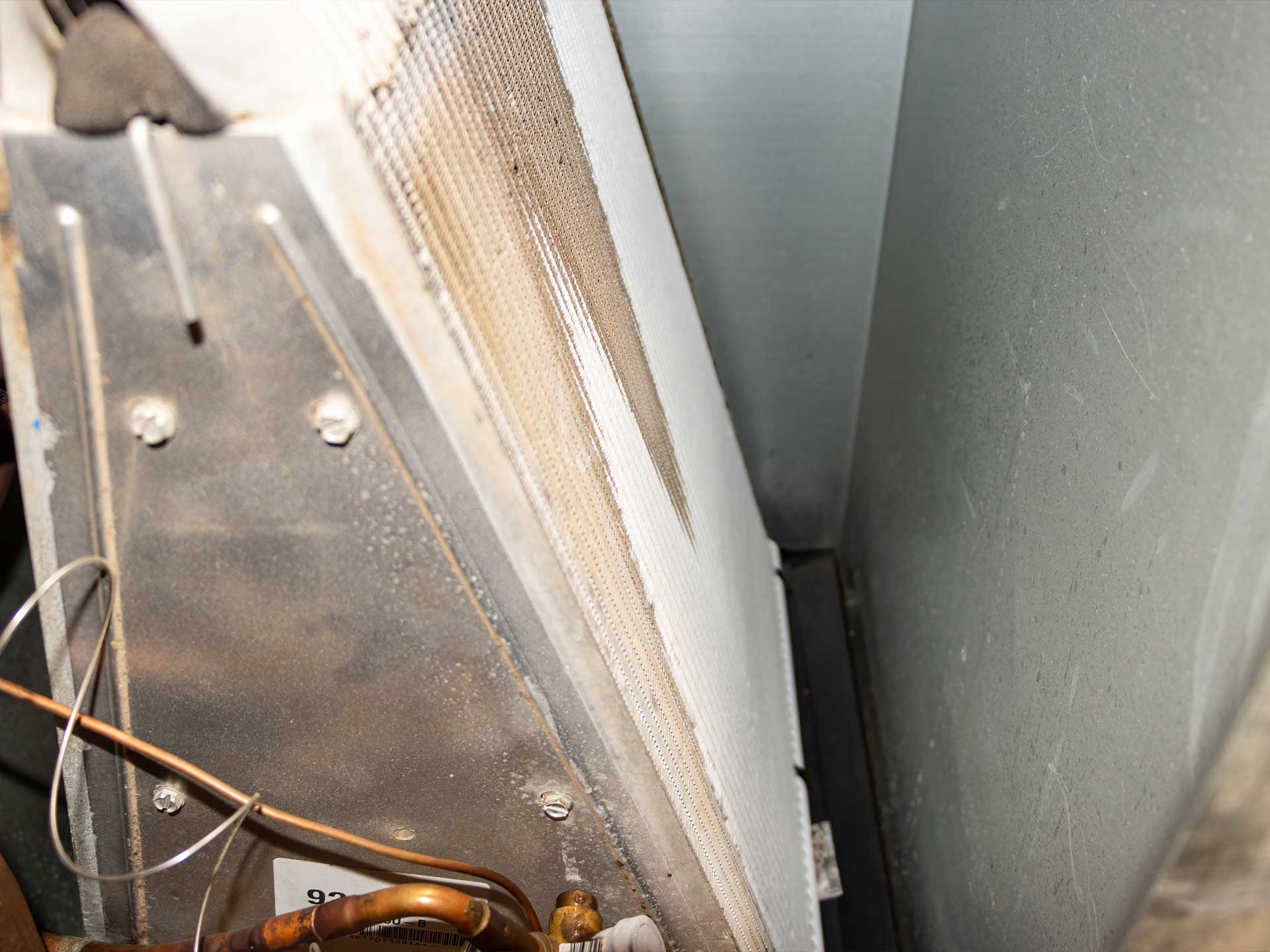
- Dirty evaporator coils
- Failing blower motors
- Damaged or restricted ductwork
Notice that each of these problems creates the same symptom even though the repair is completely different.
This is why replacing parts based on symptoms alone often leads to frustration. The visible ice doesn’t tell you which component caused it.
When Refrigerant Really Is the Problem
Low refrigerant can absolutely cause an evaporator coil to freeze.
However, it’s important to understand why.
Refrigerant doesn’t get consumed during normal operation. It circulates continuously through a sealed system. If refrigerant is low, there’s almost always a leak somewhere that needs to be located and repaired.
Lower refrigerant levels change the operating pressure inside the evaporator coil. As pressure drops, refrigerant boils at a lower temperature. Eventually, portions of the coil become cold enough for moisture to freeze instead of draining away.
This explains why simply “adding refrigerant” often doesn’t solve the problem for long. Unless the leak is repaired, refrigerant will continue escaping and the same symptoms usually return.
Experienced technicians confirm refrigerant conditions through testing rather than assuming every frozen system has a leak.
Why Thawing the Ice Isn’t Really a Repair
One of the most common homeowner questions is whether turning the system off will fix the problem.
Turning the system off is absolutely the right first step because it allows the ice to melt. However, melting the ice only removes the symptom.
The underlying issue remains.
If restricted airflow caused the freezing, the coil will likely freeze again the next time the system operates.
If a refrigerant leak caused the freezing, the same problem will continue after the ice disappears.
Think of the ice as a warning light rather than the mechanical failure itself. Removing the warning doesn’t correct the condition that caused it.
What Homeowners Can Safely Check
There are several simple things homeowners can inspect before scheduling service.
Start with the air filter. If it’s dirty, replace it with the correct size and airflow rating recommended for your system.
Walk through the home and make sure supply and return vents are open and unobstructed by furniture, rugs, or curtains.
Check the outdoor condenser to make sure leaves, grass clippings, and other debris aren’t restricting airflow around the unit.
If ice is present, turn the cooling system off and allow the evaporator coil to thaw before restarting it.
These simple steps sometimes resolve minor airflow issues. If the system freezes again, however, the problem almost always requires professional diagnosis.
Why Professional Diagnosis Matters
Two frozen air conditioners can look almost identical while requiring completely different repairs.
One homeowner may have nothing more than a severely clogged air filter.
Another may have a failing blower motor.
A third may have a refrigerant leak.
An experienced HVAC technician doesn’t begin with a repair. They begin with a diagnosis.
Airflow is evaluated. Refrigerant pressures are measured. Electrical components are tested. The blower assembly, evaporator coil, thermostat, and overall system performance are inspected together.
Only after understanding how the entire system is operating can the technician confidently identify the root cause.
That’s why professional diagnosis often saves homeowners both time and money. Rather than replacing parts based on assumptions, the repair addresses the actual problem.
Frequently Asked Questions
Can I Keep Running My Air Conditioner if It’s Frozen?
No. Continuing to run a frozen air conditioner usually causes more ice to build on the evaporator coil, reducing airflow even further. Turning the system off and allowing it to thaw helps prevent additional stress on the equipment while making professional diagnosis easier.
Does a Frozen Air Conditioner Always Mean It’s Low on Refrigerant?
No. Low refrigerant is one possible cause, but restricted airflow is responsible for many frozen air conditioners. Dirty filters, blocked vents, dirty coils, or blower problems can all produce the same symptom. A technician should determine the actual cause before repairs are made.
How Long Does It Take for a Frozen Air Conditioner to Thaw?
The amount of time depends on how much ice has formed. Most systems require several hours to thaw completely after the cooling cycle has been turned off. Running the fan without cooling may help speed up the process.
Will Replacing My Air Filter Fix the Problem?
If a clogged filter caused the airflow restriction, replacing it may prevent the system from freezing again. However, if the air conditioner continues freezing after the filter has been replaced, another issue is likely affecting the system and should be professionally evaluated.

Don’t Ignore a Frozen Air Conditioner
A frozen air conditioner is your HVAC system’s way of telling you something isn’t operating as designed. Whether the cause is restricted airflow, a refrigerant issue, or another mechanical problem, continuing to run the system rarely improves the situation and often allows the problem to become more severe.
If your air conditioner has frozen or isn’t keeping your home comfortable, Wonder Cooling can help. Our technicians focus on identifying the root cause of cooling problems so repairs address the actual issue, not just the symptoms.
Contact Wonder Cooling today to schedule service or request an evaluation. Call (423) 561-9326 or book online to get started. We proudly serve homeowners throughout Chattanooga, Ooltewah, Hixson, East Ridge, and surrounding communities.