By late September, your HVAC system has spent months moving air through the house, removing moisture, and operating through Chattanooga’s summer heat. Dust and airborne debris have passed through the equipment while the evaporator coil and condensate system have handled a season of humidity. Early fall creates a practical window to clean the system after that workload and evaluate its condition before regular heating demand begins.
HVAC cleaning goes well beyond replacing a filter or brushing leaves away from the outdoor unit. Professional cleaning addresses components where buildup can interfere with airflow, heat transfer, drainage, or mechanical operation. Done at the right time, it can also give a technician a clearer view of problems that were harder to recognize while the system was running heavily all summer.
Quick Answer
Fall is a practical time for HVAC cleaning because the cooling system has just completed its heaviest operating season while heating demand is still relatively light. Cleaning dirty coils, blower components, drain systems, filters, and accessible equipment surfaces can restore conditions the system needs for normal operation. The service also gives technicians an opportunity to inspect equipment that has just been through months of sustained use before the next season begins.
What a Summer of Cooling Leaves Behind
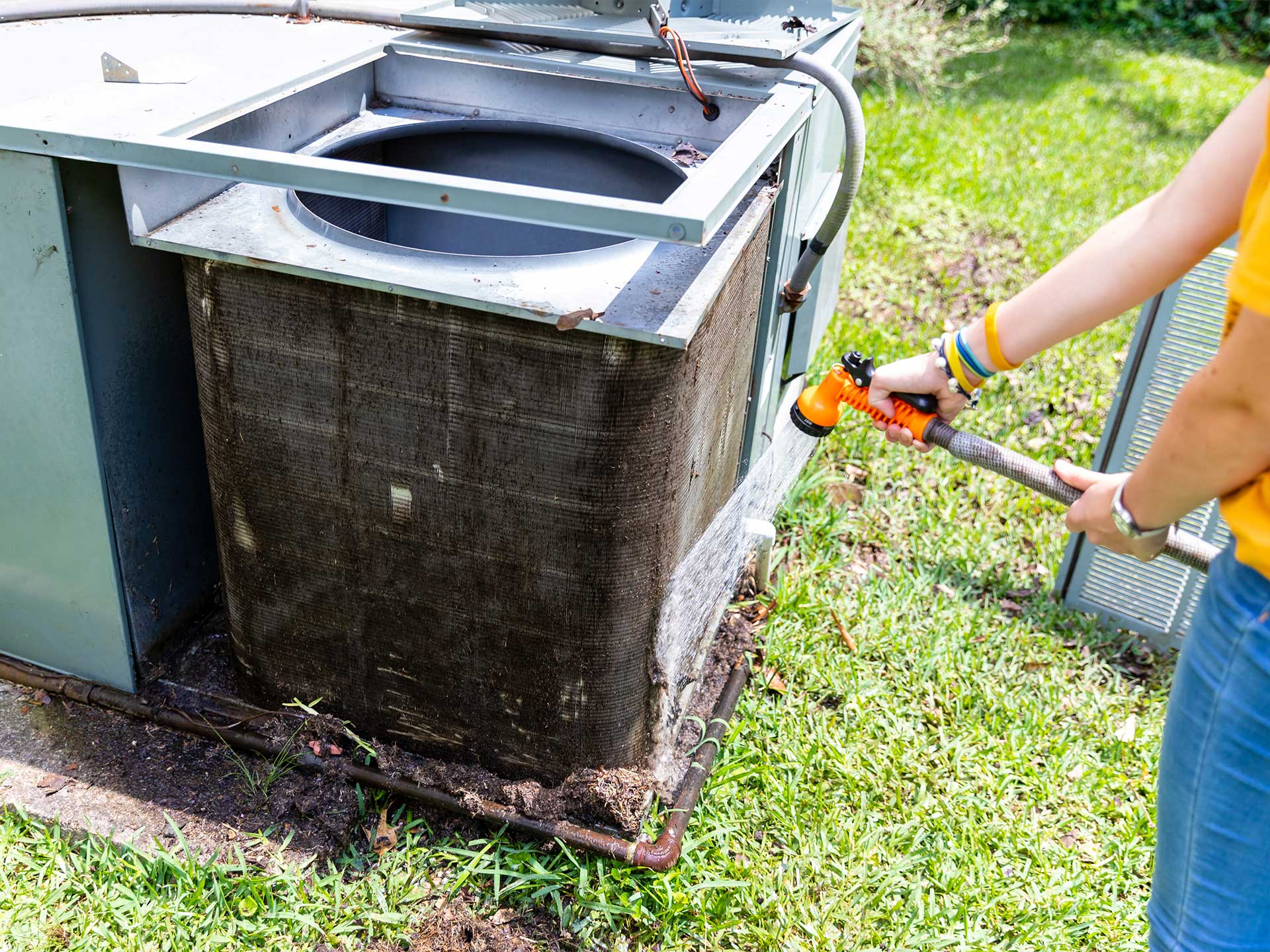
Every time your HVAC system runs, it moves household air across internal components. The filter captures a large share of dust, pet hair, fibers, pollen, and other particles, but it does not catch everything. Fine material can gradually collect on the blower assembly and evaporator coil, while the outdoor condenser is continuously exposed to dirt, vegetation, pollen, and lawn debris.
Summer also places heavy demands on the system’s moisture-control components. As humid indoor air passes across the cold evaporator coil, moisture condenses and drains through the condensate pan and drain line. After months of operation, those surfaces may develop buildup that interferes with drainage or creates conditions that deserve inspection.
Chattanooga’s combination of heavy summer cooling use, humidity, pollen, and routine yard debris gives technicians several places to look once the season winds down. Outdoor coils may have collected grass clippings or airborne debris, while indoor components have spent months moving filtered household air and handling condensation. A system can continue cooling through those conditions without making it obvious to the homeowner that cleaning is overdue.
Why Dirty HVAC Components Change How the System Operates
Air conditioning and heating equipment relies on controlled airflow and efficient heat transfer. The evaporator coil must receive enough household air to absorb heat correctly, while the condenser needs unrestricted outdoor airflow to release that heat. Dirt on either coil creates resistance between the air and the metal surface where that transfer takes place.
Blower buildup affects the system differently. The curved surfaces of a blower wheel are designed to move a particular volume of air, and accumulated debris can alter how effectively those blades perform. The motor may continue running normally while the amount of air moving through the system gradually falls.
These changes often develop slowly enough that homeowners do not notice them immediately. The first clues may be longer operating cycles, rooms that become harder to condition, weaker airflow, or energy use that creeps upward. Cleaning is valuable because it addresses physical restrictions that can affect performance before assuming a component has failed.
How Do You Know Your HVAC System Needs Cleaning?
HVAC equipment does not need to look filthy before buildup becomes worth addressing. Visible dust on accessible components is an obvious clue, but changes in system behavior can provide useful information as well. Weak airflow, longer heating or cooling cycles, unexplained increases in energy use, or musty odors when the system starts may justify a closer inspection.
Homeowners may also notice more dust collecting around registers or find that filters are becoming heavily loaded sooner than expected. Those signs do not automatically prove that the blower or coils are dirty because duct conditions, filter choice, household activity, and other factors can contribute. They do give a technician a reason to inspect the equipment instead of assuming the solution is simply changing filters more often.
Time since the last professional service is useful context, but it should not be the only reason to clean a system. Two HVAC systems of the same age can accumulate debris at very different rates based on pets, filter quality, household dust, operating hours, and environmental exposure. Inspection gives homeowners a better answer than cleaning according to an arbitrary calendar.
Professional HVAC Cleaning Goes Beyond the Filter
A filter change is an important part of system care, but it does not clean the equipment downstream from the filter. Depending on the system’s condition, professional HVAC cleaning may include the evaporator coil, condenser coil, blower assembly, condensate pan, drain line, equipment cabinet, and other accessible areas where buildup can interfere with operation. The technician can determine which components actually need attention rather than treating every system as though it requires the same work.
Cleaning also improves the quality of the inspection. Dirt can hide corrosion, drainage problems, wear, or conditions that deserve closer evaluation, while accumulated debris can make it harder to distinguish normal operation from developing trouble. Once the equipment is clean, technicians can assess what remains and explain whether anything beyond routine service is needed.
That distinction is important because cleaning should not become an excuse to recommend unnecessary repairs. A qualified technician should be able to show what was found, explain whether it affects operation, and separate routine buildup from a genuine mechanical or electrical concern. Homeowners gain more value from that judgment than from simply having visible surfaces washed.
Why Early Fall Is the Right Service Window
During the hottest part of summer, many Chattanooga air conditioners run for long stretches every day. Taking the system offline for cleaning can be inconvenient when the house is relying on it constantly, and technicians are often handling a high volume of cooling calls at the same time. By early fall, cooling demand usually eases enough to make planned service more practical.
The timing also gives technicians a chance to evaluate what the cooling season revealed. A system that developed drainage trouble, weak airflow, dirty coils, or blower buildup has just spent several months demonstrating how those conditions affect performance. Addressing them before regular heating use begins prevents the homeowner from carrying unresolved summer issues into another operating season.
Fall service therefore serves two purposes without requiring two separate visits. It addresses components that just completed heavy cooling duty while giving the technician an opportunity to check the equipment before colder weather arrives. That makes planned cleaning more useful than waiting for a breakdown to reveal what the system needed.
HVAC Cleaning and Duct Cleaning Are Different Services
Homeowners often use “HVAC cleaning” and “duct cleaning” interchangeably, but they address different parts of the home comfort system. HVAC cleaning deals with the mechanical equipment that heats, cools, moves, and manages air, while duct cleaning addresses debris inside the duct network. One service does not automatically solve problems associated with the other.
A small amount of ordinary dust inside ductwork is not the same as an evaporator coil coated with debris or a blower assembly that is no longer moving air effectively. If weak airflow originates at the blower or coil, cleaning the duct interior will not correct that mechanical restriction. Likewise, cleaning HVAC equipment will not resolve a duct system with substantial contamination or another issue that specifically requires ductwork attention.
The condition should determine the service. Technicians should trace poor airflow, odors, visible contamination, or performance problems to their actual source before recommending cleaning. That keeps the work tied to a real need instead of treating “cleaning” as one broad service for every air-quality or HVAC complaint.
What Homeowners Can Handle Between Professional Cleanings
Homeowners can do several things that reduce unnecessary buildup between service visits. Replace the air filter according to the system’s needs, keep supply and return registers open, and avoid blocking them with furniture or rugs. Around the outdoor unit, remove loose leaves, grass clippings, and vegetation that restrict the space needed for airflow.
Internal components require more caution because access alone does not make them safe to clean. Evaporator coils, blower assemblies, electrical controls, and condensate components can be damaged by incorrect cleaning methods or disturbed while the system is energized. Professional service is especially appropriate when reaching the dirty area requires opening equipment panels or working around electrical and refrigerant components.
Regular homeowner care and professional cleaning serve different purposes. Basic upkeep reduces the amount of debris entering or surrounding the system, while professional service addresses buildup inside the equipment and evaluates how that buildup has affected operation. Keeping those roles separate prevents simple maintenance from turning into an unnecessary repair project.
Frequently Asked Questions
How Often Should an HVAC System Be Professionally Cleaned?
There is no single cleaning schedule that fits every home because buildup varies with filter quality, pets, indoor dust levels, system usage, and equipment condition. A lightly used system in a clean home may need less frequent cleaning than equipment that operates heavily in a home with pets or high dust levels. The better approach is to inspect the components and base cleaning on what is actually present rather than an arbitrary calendar interval.
Is HVAC Cleaning the Same as HVAC Maintenance?
No, although cleaning is often part of a maintenance visit. Maintenance also includes testing system operation, checking electrical components, evaluating airflow, inspecting drainage, and looking for conditions that could affect reliability. Cleaning removes buildup, while maintenance evaluates whether the equipment is operating correctly after that buildup is addressed.
Can a Dirty HVAC System Increase Energy Use?
Yes, when dirt interferes with airflow or heat transfer. A dirty coil or blower can cause the system to operate longer to accomplish the same heating or cooling work, although the exact effect varies according to the severity and location of the buildup. Cleaning cannot correct every efficiency problem, but it removes one source of unnecessary resistance within the system.
Should I Have My HVAC System Cleaned Before Turning on the Heat?
Early fall is a useful time because the equipment has just completed months of cooling operation and regular heating demand has not fully begun. A technician can clean components affected by summer use while also checking the system before colder weather increases operating time. Homeowners who know their system has not been professionally serviced recently have an especially good reason to schedule an inspection during this transition.
Schedule HVAC Cleaning Before Heating Season
Fall gives Chattanooga homeowners a convenient opportunity to service equipment after a demanding cooling season and before heating use increases. Professional cleaning can remove buildup from components that affect airflow and heat transfer while giving a technician a clear look at the system’s current condition. That information helps homeowners address legitimate concerns before they become inconvenient heating or cooling problems. Wonder Cooling provides HVAC cleaning and maintenance for homeowners in Chattanooga, Ooltewah, Hixson, McDonald, and surrounding communities.
Contact Wonder Cooling today to schedule HVAC cleaning or maintenance. Call (423) 561-9326 or book online to get started. We proudly serve homeowners throughout Chattanooga, Ooltewah, Hixson, East Ridge, and surrounding communities.